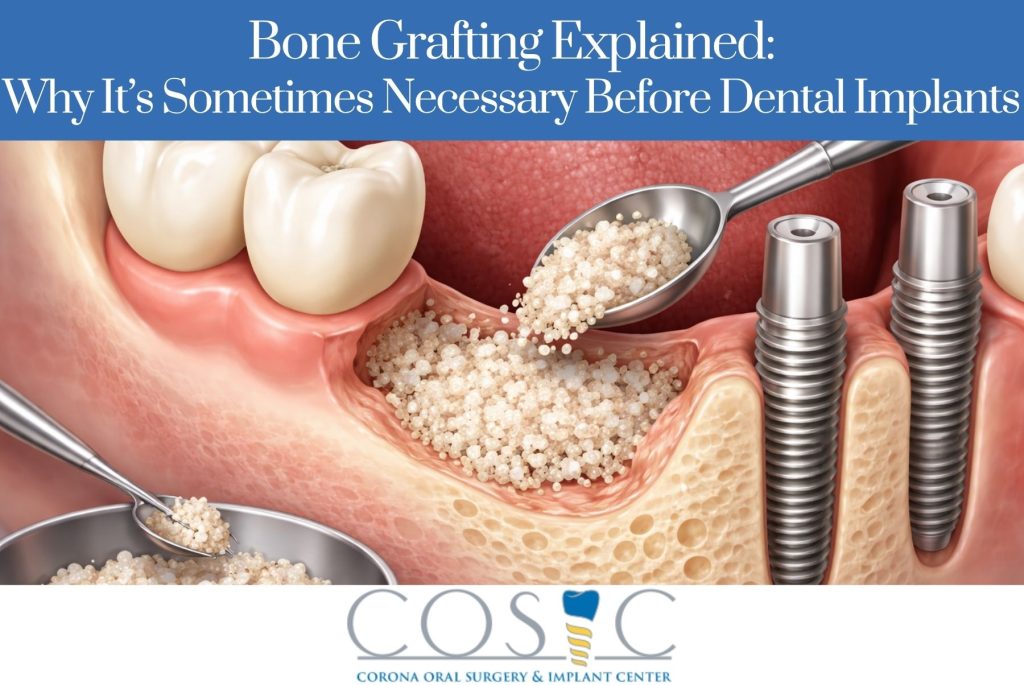
When it comes to restoring your smile with dental implants, many patients are surprised to learn that bone grafting may be a necessary first step. At Corona Oral Surgery and Implant Center, we believe that informed patients make confident decisions about their oral health. This comprehensive guide explains what bone grafting is, why it may be required, and how it supports long-term implant success.
What Is Bone Grafting?
Bone grafting is a surgical procedure used to rebuild or strengthen bone in the jaw. When a tooth is lost, the surrounding bone can begin to deteriorate over time due to lack of stimulation. Bone grafting restores this lost volume, creating a solid foundation for dental implants.
The procedure involves placing bone material—either from your own body, a donor source, or a synthetic substitute—into the deficient area. Over time, your body naturally integrates this material, forming new, healthy bone.
Why Bone Grafting Is Sometimes Necessary Before Implants
Dental implants require a stable and sufficient amount of jawbone to anchor securely. Without adequate bone, implants may fail or not be an option at all. Bone grafting becomes necessary in several situations:
1. Bone Loss After Tooth Extraction
After a tooth is removed or lost, the jawbone in that area begins to shrink. This process, called resorption, can happen quickly—sometimes within months.
2. Periodontal (Gum) Disease
Advanced gum disease can destroy both soft tissue and the supporting bone structure, leaving insufficient bone for implant placement.
3. Trauma or Injury
Accidents or facial trauma can damage or reduce jawbone density, requiring reconstruction before implants can be placed.
4. Long-Term Tooth Loss
If you’ve been missing a tooth for years, the bone may have significantly deteriorated, making grafting essential.
Types of Bone Grafts
At Corona Oral Surgery and Implant Center, we customize treatment based on your specific needs. Common types of bone grafts include:
- Autografts: Bone taken from your own body
- Allografts: Donor bone from a tissue bank
- Xenografts: Bone derived from animal sources
- Alloplasts: Synthetic bone materials
Each option is safe and effective, and your oral surgeon will recommend the best choice for your situation.
The Bone Grafting Procedure: What to Expect
Bone grafting is typically performed under local anesthesia, sedation, or general anesthesia depending on the complexity of the case.
Step-by-step overview:
- The area is numbed for comfort
- A small incision is made in the gum tissue
- Bone graft material is placed in the targeted area
- The site is closed and protected for healing
The procedure is generally well-tolerated, and most patients experience minimal discomfort afterward.
Healing and Recovery Timeline
Healing time varies depending on the size of the graft and your body’s natural healing ability. In most cases:
- Initial healing: 1–2 weeks
- Bone integration: 3–6 months (sometimes longer)
Once the graft has fully integrated, your jaw will be strong enough to support a dental implant.
Benefits of Bone Grafting Before Implants
Bone grafting plays a critical role in the success of dental implants. Key benefits include:
- Provides a stable foundation for implants
- Improves long-term implant success rates
- Restores facial structure and appearance
- Prevents further bone loss
- Enhances overall oral health
Are You a Candidate for Bone Grafting?
You may be a candidate if you:
- Have been missing teeth for an extended period
- Have experienced bone loss due to gum disease
- Have insufficient jawbone density for implants
- Want a long-lasting, natural-looking tooth replacement
A consultation with a skilled oral surgeon is the best way to determine your needs.
Frequently Asked Questions (Q&A)
Is bone grafting painful?
Most patients report minimal discomfort during and after the procedure. Sedation options are available to ensure a comfortable experience.
How do I know if I need a bone graft?
A detailed examination, including 3D imaging, will help determine if your jawbone can support an implant or if grafting is needed.
How long does the bone graft last?
Once fully integrated, the graft becomes part of your natural bone and can last a lifetime with proper care.
Can dental implants be placed at the same time as a bone graft?
In some cases, yes. However, many patients require a healing period before implant placement.
What are the risks of bone grafting?
Complications are rare but may include infection, graft rejection, or delayed healing. Choosing an experienced oral surgeon greatly reduces these risks.
Is bone grafting safe?
Yes, bone grafting is a well-established and safe procedure with a high success rate when performed by qualified professionals.
What happens if I don’t get a bone graft?
Without sufficient bone, dental implants may fail or may not be possible. Bone loss can also continue over time, affecting your facial structure.
How much does bone grafting cost?
Costs vary depending on the complexity of the procedure. A personalized consultation will provide accurate pricing and treatment options.
Why Choose Corona Oral Surgery and Implant Center?
At Corona Oral Surgery and Implant Center, we combine advanced technology with compassionate care to deliver exceptional results. Our experienced team specializes in dental implants and bone grafting procedures, ensuring each patient receives personalized, high-quality treatment.
We are committed to restoring your smile safely, effectively, and comfortably.
Contact Information
Corona Oral Surgery and Implant Center
914 South Washburn Avenue Suite 3
Corona, CA 92882
Phone: (951) 736-8133
Website: cosicdds.com