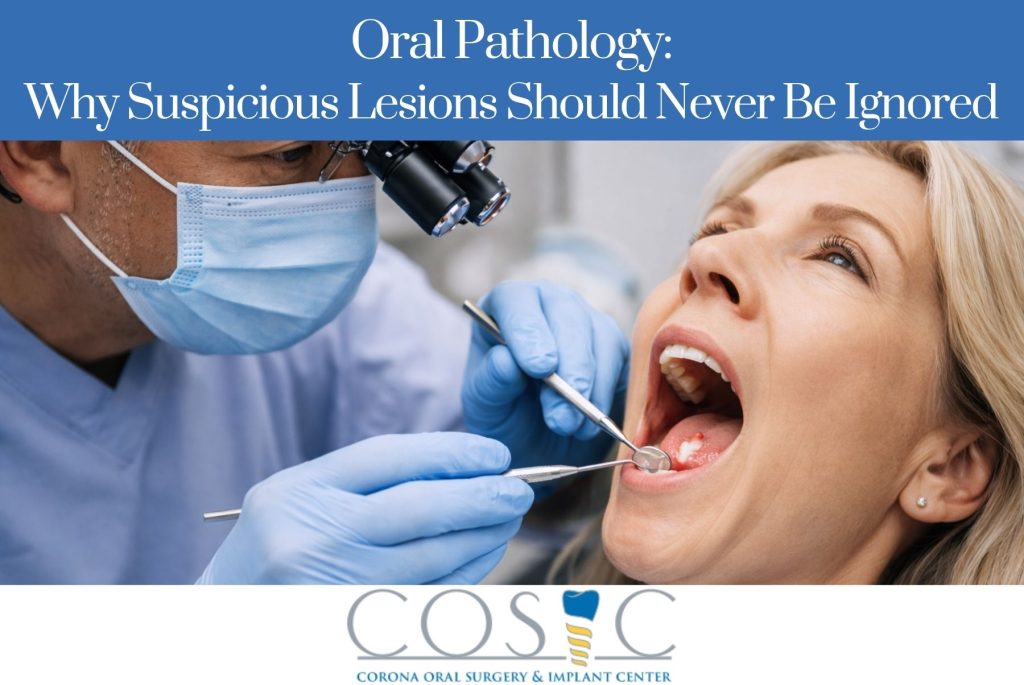
Oral health extends far beyond clean teeth and healthy gums. One of the most critical — yet often overlooked — aspects of dental care is oral pathology, the study and diagnosis of diseases affecting the mouth, jaws, and related structures. At Corona Oral Surgery and Implant Center, we emphasize early detection and proactive care because suspicious oral lesions can sometimes signal serious underlying conditions, including oral cancer.
What Is Oral Pathology?
Oral pathology focuses on identifying abnormalities in the oral and maxillofacial region. These abnormalities may present as:
- Unusual lumps or growths
- Red or white patches
- Persistent sores or ulcers
- Changes in tissue texture or color
- Swelling or unexplained pain
While many lesions are benign, others may be precancerous or cancerous. The challenge is that they often appear harmless at first — making professional evaluation essential.
Why Suspicious Lesions Should Never Be Ignored
Ignoring unusual changes in your mouth can delay diagnosis and treatment, potentially leading to serious health consequences. Here’s why prompt attention matters:
1. Early Detection Saves Lives
Oral cancer has a significantly higher survival rate when detected early. Lesions that persist for more than two weeks should always be evaluated by a specialist.
2. Symptoms Are Often Subtle
Many dangerous oral conditions develop without pain or obvious discomfort. A small patch or sore may be easy to dismiss but could indicate something more serious.
3. Conditions Can Progress Quickly
Certain oral diseases can evolve rapidly. What begins as a minor irritation may develop into a more advanced condition if left untreated.
4. Peace of Mind
Not every lesion is dangerous — but only a professional diagnosis can confirm that. Early evaluation eliminates uncertainty and ensures proper care.
Common Types of Oral Lesions
Understanding the types of lesions that can occur helps patients recognize when to seek care:
Benign Lesions
- Canker sores
- Fibromas
- Mucocele (mucous cysts)
Precancerous Lesions
- Leukoplakia (white patches)
- Erythroplakia (red patches)
Malignant Lesions
- Oral squamous cell carcinoma
Warning Signs You Shouldn’t Ignore
If you notice any of the following symptoms, schedule an evaluation immediately:
- A sore that doesn’t heal within 10–14 days
- Persistent pain or numbness
- Difficulty chewing or swallowing
- A lump or thickened area in the mouth
- Unexplained bleeding
- Changes in voice or jaw movement
How Oral Pathology Is Diagnosed
At Corona Oral Surgery and Implant Center, diagnosis involves a thorough clinical examination and may include:
- Visual and physical assessment
- Review of medical and dental history
- Digital imaging
- Biopsy of suspicious tissue
A biopsy is often the most definitive way to determine whether a lesion is benign, precancerous, or malignant.
Treatment Options
Treatment depends on the diagnosis but may include:
- Monitoring and follow-up visits
- Medication or topical treatments
- Surgical removal of the lesion
- Referral for oncology care if needed
Our experienced team ensures that each patient receives personalized, evidence-based treatment.
The Importance of Routine Oral Exams
Regular dental and oral surgery visits are critical for early detection. Many serious conditions are discovered during routine exams before symptoms even arise.
At Corona Oral Surgery and Implant Center, we use advanced diagnostic techniques and a patient-focused approach to ensure optimal outcomes.
Why Choose Corona Oral Surgery and Implant Center?
Patients trust our practice because we combine clinical expertise with compassionate care. We are committed to:
- Early detection and prevention
- Advanced diagnostic technology
- Patient education and transparency
- Comprehensive oral and maxillofacial care
Your health and safety are our top priorities.
Frequently Asked Questions (Q&A)
What is considered a suspicious oral lesion?
Any abnormal change in the mouth — such as a sore, lump, or discoloration that doesn’t heal within two weeks — should be considered suspicious and evaluated.
Are all oral lesions cancerous?
No. Many lesions are benign, but only a professional examination can determine the nature of the lesion.
Does oral cancer always cause pain?
No. Oral cancer often develops without pain in its early stages, which is why regular exams are so important.
What happens during a biopsy?
A small sample of tissue is removed and sent to a laboratory for analysis. This helps determine whether the lesion is benign or malignant.
How often should I have an oral cancer screening?
It is recommended to have an oral cancer screening during routine dental visits, typically every 6 months, or more frequently if you are at higher risk.
Who is at higher risk for oral cancer?
Risk factors include tobacco use, heavy alcohol consumption, HPV infection, excessive sun exposure (for lip cancer), and a history of oral lesions.
Can oral lesions go away on their own?
Some minor lesions may resolve on their own, but any lesion lasting longer than two weeks should be evaluated.
Is treatment painful?
Most diagnostic and treatment procedures are performed with patient comfort in mind, often using local anesthesia or sedation if needed.
Contact Information
Corona Oral Surgery and Implant Center
914 South Washburn Avenue Suite 3
Corona, CA 92882
Phone: (951) 736-8133
Website: cosicdds.com