When you’re missing one or more teeth, restoring your smile is about more than aesthetics—it’s about protecting your oral health, maintaining proper function, and preserving your confidence. Two of the most common solutions are dental implants and dental bridges, but choosing between them isn’t always straightforward.
At Corona Oral Surgery and Implant Center, patients often ask which option is best. The answer depends on your specific dental condition, lifestyle, and long-term goals. This guide breaks down everything you need to know so you can make an informed decision.
Understanding Dental Implants
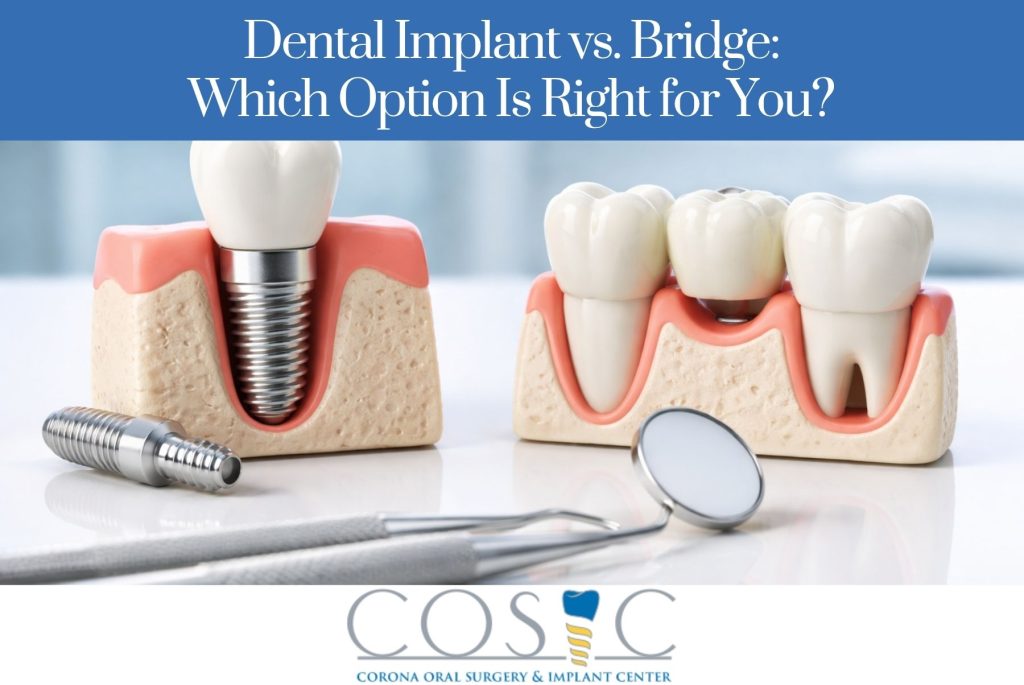
A dental implant is a permanent tooth replacement that mimics the structure of a natural tooth. It consists of a titanium post surgically placed into the jawbone, topped with a custom crown.
Key Benefits of Dental Implants
- Long-lasting solution (often decades or more)
- Preserves jawbone health by preventing bone loss
- Looks and functions like a natural tooth
- Does not rely on adjacent teeth for support
- Improves chewing and speech
Considerations
- Requires minor oral surgery
- Healing time can take several months
- Higher upfront cost compared to bridges
Understanding Dental Bridges
A dental bridge fills the gap left by a missing tooth by anchoring an artificial tooth to adjacent natural teeth (or crowns).
Key Benefits of Dental Bridges
- Faster treatment timeline (usually completed in a few weeks)
- Lower initial cost
- Non-surgical option
- Effective for restoring appearance and function
Considerations
- Requires reshaping healthy adjacent teeth
- Does not prevent bone loss in the jaw
- May need replacement after 10–15 years
Dental Implant vs. Bridge: Key Differences
1. Longevity
- Implants: Designed to last decades with proper care
- Bridges: Typically last 10–15 years
2. Bone Health
- Implants: Stimulate and preserve jawbone
- Bridges: Do not prevent bone deterioration
3. Impact on Neighboring Teeth
- Implants: Stand alone, no impact on surrounding teeth
- Bridges: Require modification of adjacent teeth
4. Procedure & Recovery
- Implants: Surgical placement + healing period
- Bridges: Non-surgical and quicker completion
5. Cost
- Implants: Higher upfront investment, long-term value
- Bridges: Lower initial cost, may require replacement sooner
Which Option Is Right for You?
The best choice depends on several factors:
You May Be a Good Candidate for Dental Implants If:
- You have sufficient jawbone density
- You want a long-term, permanent solution
- You prefer not to alter adjacent healthy teeth
- You’re in good overall health for minor surgery
A Dental Bridge May Be Better If:
- You need a quicker solution
- You want to avoid surgery
- Adjacent teeth already require crowns
- Budget is a primary concern
Why Professional Evaluation Matters
Every patient’s oral health situation is unique. At Corona Oral Surgery and Implant Center, a comprehensive evaluation—including imaging and a detailed consultation—helps determine the most effective and long-lasting solution for your needs.
Choosing the right treatment isn’t just about replacing a tooth—it’s about preserving your oral health for years to come.
Frequently Asked Questions (Q&A)
Q: Are dental implants painful?
A: Most patients report minimal discomfort. The procedure is typically performed under local anesthesia, and post-operative soreness is manageable with medication.
Q: How long do dental implants last?
A: With proper care, dental implants can last 20+ years, often a lifetime.
Q: How long does a dental bridge last?
A: Dental bridges generally last 10–15 years, depending on oral hygiene and wear.
Q: Can anyone get dental implants?
A: Not everyone is an immediate candidate. Adequate bone density and overall health are important. Bone grafting may be recommended if needed.
Q: Do dental bridges look natural?
A: Yes, modern bridges are designed to match your natural teeth in color and shape.
Q: Is the implant process time-consuming?
A: Yes, it can take several months due to healing time, but the long-term benefits often outweigh the wait.
Q: Which option is more cost-effective?
A: Bridges are less expensive upfront, but implants often provide better long-term value due to durability.
Q: Will insurance cover implants or bridges?
A: Coverage varies. Many plans partially cover bridges, while implant coverage is becoming more common. It’s best to check with your provider.
Schedule Your Consultation
If you’re considering tooth replacement options, the experienced team at Corona Oral Surgery and Implant Center is here to help you make the right choice for your smile and your health.
Corona Oral Surgery and Implant Center
914 South Washburn Avenue Suite 3
Corona, CA 92882
📞 Phone: (951) 736-8133
🌐 Website: cosicdds.com