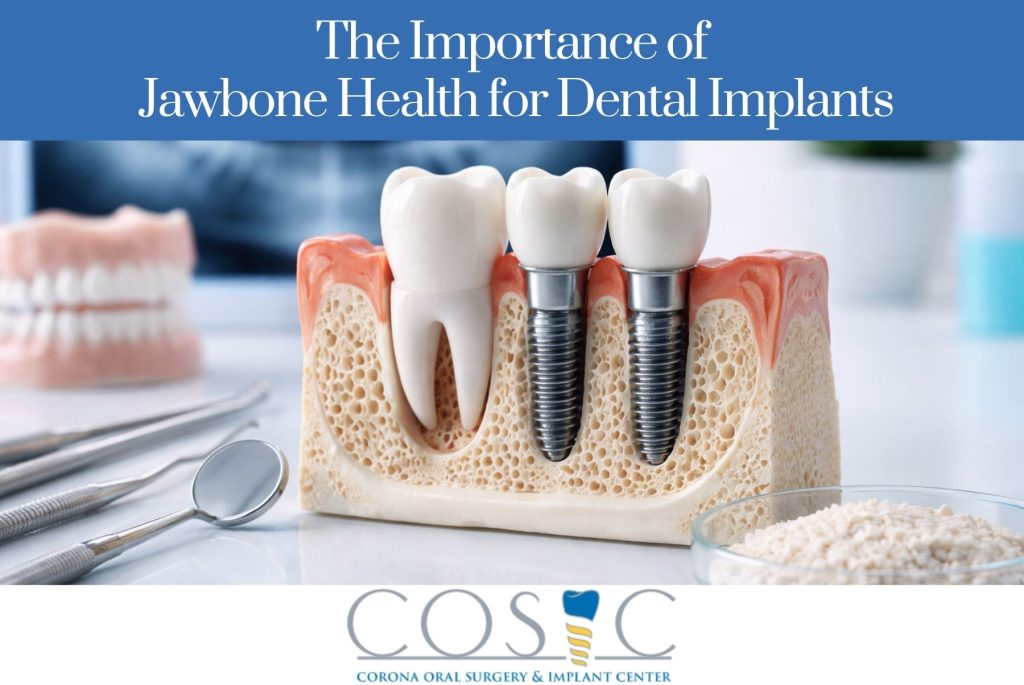
When considering dental implants, most patients focus on the visible outcome—a natural-looking, fully functional smile. However, what lies beneath the surface is just as critical. The success, longevity, and stability of dental implants depend heavily on one key factor: jawbone health.
At Corona Oral Surgery and Implant Center, we emphasize the foundational role your jawbone plays in achieving optimal implant results. Understanding why jawbone health matters—and how to maintain or restore it—can make all the difference in your treatment outcome.
Why Jawbone Health Matters for Dental Implants
Dental implants are designed to mimic natural tooth roots. They are surgically placed into the jawbone, where they fuse with the bone through a process called osseointegration. This fusion creates a stable base for crowns, bridges, or dentures.
For this process to succeed, the jawbone must have:
- Sufficient density (bone strength)
- Adequate volume (bone height and width)
- Healthy blood supply
Without these conditions, implants may fail to properly integrate, leading to instability or even implant loss.
What Causes Jawbone Deterioration?
Jawbone loss is more common than many people realize and can occur for several reasons:
1. Tooth Loss
When a tooth is lost, the surrounding bone no longer receives stimulation from chewing forces. This leads to gradual bone resorption.
2. Periodontal (Gum) Disease
Advanced gum disease can destroy both soft tissue and bone, weakening the jaw’s structure.
3. Trauma or Injury
Accidents or injuries can damage the jawbone, reducing its ability to support implants.
4. Denture Use
Traditional dentures sit on top of the gums and do not stimulate the bone, which can accelerate bone loss over time.
How Jawbone Loss Affects Dental Implants
If the jawbone is not strong or thick enough, several complications may arise:
- Implant instability or failure
- Poor aesthetic results (sunken facial appearance)
- Difficulty placing implants in ideal positions
- Increased treatment complexity
This is why a comprehensive evaluation is essential before implant placement.
Solutions for Improving Jawbone Health
The good news is that even if you have experienced bone loss, modern oral surgery techniques can often restore your candidacy for dental implants.
Bone Grafting
Bone grafting involves adding bone material to areas where the jawbone is deficient. Over time, this material integrates with your natural bone, creating a stronger foundation.
Sinus Lift (Sinus Augmentation)
For patients needing implants in the upper jaw, a sinus lift can increase bone height in the molar and premolar areas.
Ridge Augmentation
This procedure rebuilds the natural contour of the jawbone after bone loss.
Guided Tissue Regeneration
Used in cases of gum disease, this technique encourages the body to regenerate lost bone and tissue.
At Corona Oral Surgery and Implant Center, we use advanced imaging and surgical techniques to ensure precise diagnosis and effective treatment planning.
Preventing Jawbone Loss
Maintaining jawbone health starts with proactive dental care:
- Replace missing teeth promptly with implants or other solutions
- Maintain excellent oral hygiene
- Schedule regular dental checkups
- Treat gum disease early
- Avoid smoking, which impairs bone healing
Early intervention is key. The sooner bone loss is addressed, the simpler and more effective treatment tends to be.
Why Choose a Specialist for Dental Implants?
Dental implant success is highly dependent on surgical expertise and proper planning. Choosing an experienced oral surgery center ensures:
- Accurate assessment of bone quality and quantity
- Access to advanced procedures like bone grafting
- Reduced risk of complications
- Long-lasting, natural-looking results
At Corona Oral Surgery and Implant Center, patient safety, comfort, and outcomes are our top priorities.
Frequently Asked Questions (Q&A)
Q: How do I know if I have enough bone for dental implants?
A: A 3D scan or imaging study performed by your oral surgeon will determine whether your jawbone has sufficient density and volume for implants.
Q: Can I still get dental implants if I have bone loss?
A: Yes, in many cases. Procedures like bone grafting or sinus lifts can rebuild the bone and make implants possible.
Q: How long does bone grafting take to heal?
A: Healing time varies but typically ranges from 3 to 6 months before implants can be placed.
Q: Is bone grafting painful?
A: Most patients report minimal discomfort. The procedure is performed under anesthesia, and post-operative pain is usually manageable with medication.
Q: What happens if I don’t replace a missing tooth?
A: Over time, the jawbone in that area will shrink, which can affect your facial structure and make future implant placement more difficult.
Q: Are dental implants permanent?
A: With proper care and good oral health, dental implants can last many years—often decades.
Q: Does age affect jawbone health for implants?
A: Age alone is not a limiting factor. Overall health and bone condition are more important considerations.
Take the First Step Toward a Healthier Smile
Jawbone health is the foundation of successful dental implants. Whether you’ve recently lost a tooth or have been dealing with missing teeth for years, it’s never too late to explore your options.
At Corona Oral Surgery and Implant Center, we provide comprehensive evaluations and customized treatment plans to restore both function and confidence.
Contact Information
Corona Oral Surgery and Implant Center
914 South Washburn Avenue, Suite 3
Corona, CA 92882
Phone: (951) 736-8133
Website: cosicdds.com