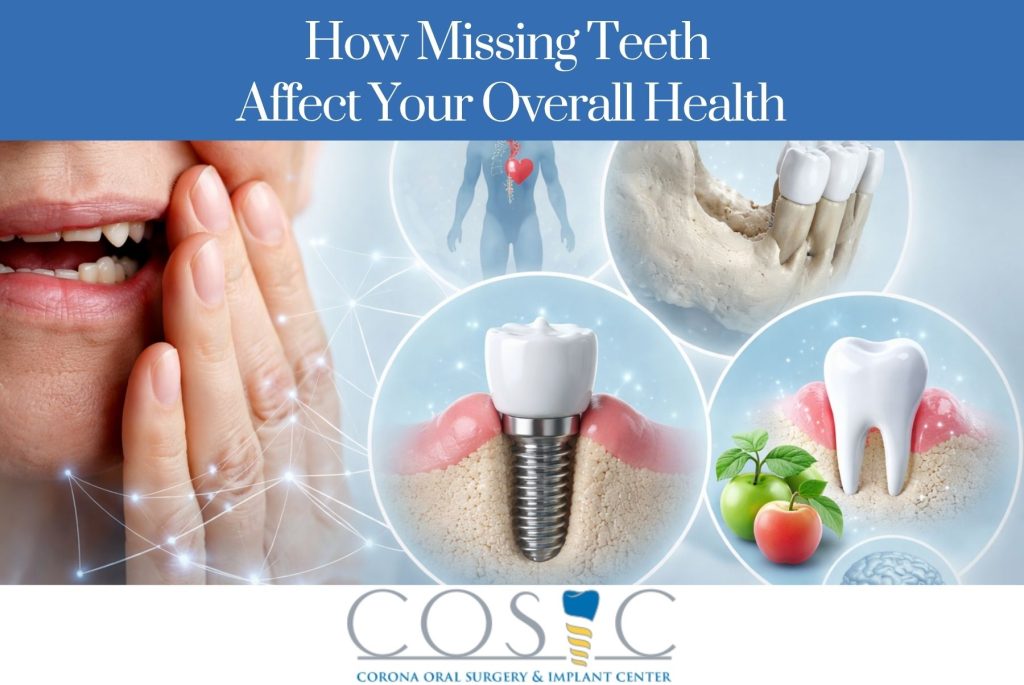
Missing teeth are often thought of as a cosmetic issue—but the reality is far more serious. At Corona Oral Surgery and Implant Center, we regularly help patients understand that tooth loss can impact not only your smile, but your entire body. From nutrition to bone health and even heart disease risk, the consequences of untreated missing teeth can be significant.
Let’s take a closer look at how missing teeth affect your overall health—and what you can do about it.
The Hidden Health Risks of Missing Teeth
1. Difficulty Eating and Poor Nutrition
Teeth play a critical role in chewing and breaking down food. When teeth are missing, it becomes harder to eat certain foods—especially those that are rich in essential nutrients like fruits, vegetables, and lean proteins.
Over time, many people shift toward softer, processed foods that are often lower in nutritional value. This can lead to:
- Vitamin deficiencies
- Digestive issues
- Increased risk of chronic conditions such as diabetes and heart disease
2. Jawbone Loss and Facial Changes
Your teeth stimulate the jawbone through everyday chewing. When a tooth is lost, that stimulation disappears, causing the bone in that area to deteriorate over time.
This can lead to:
- Shrinking jawbone (bone resorption)
- Changes in facial structure
- A sunken or prematurely aged appearance
Without intervention, bone loss can also make future dental treatments more complex.
3. Shifting Teeth and Bite Problems
When a tooth is missing, the surrounding teeth begin to shift into the empty space. This can cause:
- Misalignment
- Bite problems (malocclusion)
- Increased wear and tear on remaining teeth
These changes can eventually lead to jaw pain, headaches, and difficulty chewing.
4. Speech Difficulties
Teeth play a key role in forming sounds. Missing teeth—especially in the front—can affect your ability to pronounce certain words clearly, leading to:
- Slurred or unclear speech
- Reduced confidence in social or professional settings
5. Increased Risk of Gum Disease
Gaps left by missing teeth can trap food particles and bacteria, making it harder to maintain proper oral hygiene. This increases the risk of:
- Gum disease (periodontitis)
- Infection
- Further tooth loss
Gum disease has also been linked to systemic health issues like heart disease and stroke.
6. Impact on Mental and Emotional Health
Tooth loss can take a toll on self-esteem and confidence. Many patients report:
- Avoiding social situations
- Feeling embarrassed to smile
- Increased anxiety or depression
Your smile plays a big role in how you present yourself to the world—and how you feel about yourself.
The Best Solution: Dental Implants
At Corona Oral Surgery and Implant Center, dental implants are one of the most effective solutions for replacing missing teeth. Unlike dentures or bridges, implants:
- Restore full chewing function
- Prevent bone loss
- Maintain facial structure
- Look and feel like natural teeth
Dental implants are a long-term investment in both your oral health and your overall well-being.
When Should You Seek Treatment?
If you are missing even one tooth, it’s important to consult with an oral surgeon as soon as possible. Early treatment helps prevent complications such as bone loss and shifting teeth.
Delaying treatment can limit your options and lead to more extensive procedures later on.
Frequently Asked Questions (Q&A)
Q: Can missing teeth really affect my overall health?
A: Yes. Missing teeth can impact nutrition, increase the risk of gum disease, and even contribute to systemic health issues like heart disease.
Q: How quickly does bone loss occur after losing a tooth?
A: Bone loss can begin within the first few months after tooth loss and continues over time if the area is not treated.
Q: Are dental implants painful?
A: Most patients report minimal discomfort. The procedure is typically performed under anesthesia, and recovery is manageable with proper care.
Q: Am I a candidate for dental implants?
A: Most healthy adults are candidates. A consultation at Corona Oral Surgery and Implant Center will determine your eligibility based on bone density and overall health.
Q: What happens if I don’t replace a missing tooth?
A: You may experience shifting teeth, bone loss, bite issues, and increased risk of further dental problems.
Q: How long do dental implants last?
A: With proper care, dental implants can last many years—often decades or even a lifetime.
Q: Are there alternatives to dental implants?
A: Yes, options include dental bridges and dentures. However, implants are generally considered the most durable and natural-feeling solution.
Restore Your Smile and Your Health
Missing teeth are more than just a cosmetic concern—they can affect your quality of life and long-term health. The good news is that modern oral surgery offers highly effective solutions to restore both function and confidence.
If you’re ready to take the next step, the team at Corona Oral Surgery and Implant Center is here to help.
Contact Information
Corona Oral Surgery and Implant Center
914 South Washburn Avenue, Suite 3
Corona, CA 92882
📞 Phone: (951) 736-8133
🌐 Website: cosicdds.com