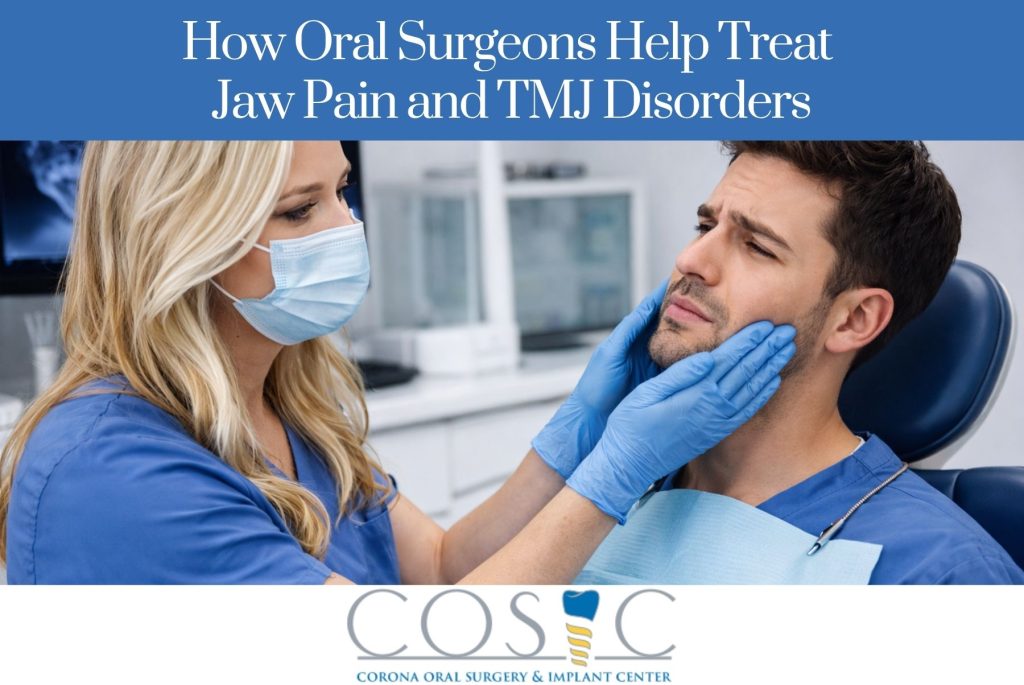
Jaw pain isn’t just uncomfortable—it can interfere with speaking, eating, sleeping, and overall quality of life. For many patients, persistent jaw discomfort is linked to temporomandibular joint (TMJ) disorders, a group of conditions affecting the jaw joint and surrounding muscles. While mild cases may resolve with conservative care, more complex or chronic issues often require the expertise of an oral and maxillofacial surgeon.
At Corona Oral Surgery and Implant Center, patients receive advanced, specialized care for diagnosing and treating jaw pain and TMJ disorders using the latest techniques and technologies.
Understanding the Temporomandibular Joint (TMJ)
The temporomandibular joints connect your jawbone to your skull, acting like sliding hinges on each side of your face. These joints enable essential movements such as chewing, speaking, and yawning.
When something disrupts the normal function of these joints, it can lead to TMJ disorders (TMD), which may involve:
- Joint inflammation
- Muscle tension or spasms
- Misalignment of the jaw
- Damage to cartilage or discs within the joint
Common Symptoms of TMJ Disorders
TMJ disorders can present in a variety of ways, often making them difficult to diagnose without professional evaluation. Common symptoms include:
- Persistent jaw pain or tenderness
- Clicking, popping, or grinding sounds when opening or closing the mouth
- Difficulty chewing or discomfort while eating
- Locking of the jaw (open or closed position)
- Facial pain or swelling
- Headaches or migraines
- Earaches or ringing in the ears (tinnitus)
If you experience any of these symptoms regularly, it’s important to seek evaluation from a qualified oral surgeon.
What Causes Jaw Pain and TMJ Disorders?
TMJ disorders can develop from several underlying factors, including:
- Teeth grinding or clenching (bruxism)
- Jaw injury or trauma
- Arthritis affecting the joint
- Misaligned bite (malocclusion)
- Stress-related muscle tension
- Degeneration of the joint over time
Often, TMJ disorders are multifactorial, meaning more than one issue may be contributing to your symptoms.
How Oral Surgeons Diagnose TMJ Disorders
Oral and maxillofacial surgeons are uniquely trained to evaluate both the structural and functional aspects of the jaw. At Corona Oral Surgery and Implant Center, diagnosis may include:
- Comprehensive physical examination of the jaw and bite
- Review of symptoms and medical history
- Advanced imaging (such as CT scans or MRI)
- Evaluation of joint movement and sound patterns
This thorough approach ensures an accurate diagnosis and a customized treatment plan.
Treatment Options for Jaw Pain and TMJ Disorders
Treatment varies depending on the severity and cause of the condition. Oral surgeons provide both non-surgical and surgical solutions.
Non-Surgical Treatments
Many patients benefit from conservative care, including:
- Custom oral appliances (night guards or splints)
- Anti-inflammatory medications
- Physical therapy
- Lifestyle modifications (stress reduction, diet changes)
- Botox injections for muscle tension relief
Minimally Invasive Procedures
If conservative treatments are not effective, minimally invasive procedures may be recommended:
- Arthrocentesis – flushing the joint to remove debris and reduce inflammation
- Arthroscopy – using a small camera to diagnose and treat joint issues
Surgical Treatments
For advanced or severe TMJ disorders, surgical intervention may be necessary:
- Open joint surgery to repair or replace damaged joint structures
- Correction of structural abnormalities
- Treatment of joint degeneration or severe misalignment
Oral surgeons carefully evaluate whether surgery is appropriate and prioritize conservative approaches whenever possible.
Why Choose an Oral Surgeon for TMJ Treatment?
Oral and maxillofacial surgeons receive extensive training beyond dental school, specializing in conditions affecting the face, jaw, and oral structures. Their expertise allows them to:
- Accurately diagnose complex jaw conditions
- Provide advanced surgical and non-surgical treatments
- Coordinate care with other specialists if needed
- Deliver long-term solutions rather than temporary relief
At Corona Oral Surgery and Implant Center, patient-centered care and precision treatment planning are the foundation of every procedure.
When Should You Seek Treatment?
You should consult an oral surgeon if:
- Jaw pain persists for more than a few weeks
- Your jaw frequently locks or clicks painfully
- You experience difficulty chewing or speaking
- Over-the-counter treatments are not providing relief
- Symptoms are worsening over time
Early intervention can prevent further complications and improve outcomes.
Comprehensive Q&A Section
What is the difference between TMJ and TMD?
TMJ refers to the temporomandibular joint itself, while TMD (temporomandibular disorder) refers to conditions affecting the joint and surrounding muscles.
Can TMJ disorders go away on their own?
Mild cases may improve with rest and self-care, but persistent or severe symptoms often require professional treatment.
Is jaw clicking always a sign of TMJ disorder?
Not always. Occasional clicking without pain may not be serious, but frequent clicking accompanied by pain or limited movement should be evaluated.
Are TMJ treatments painful?
Most treatments, especially non-surgical ones, are minimally invasive and designed to reduce pain—not cause it. Surgical options are performed with anesthesia for comfort.
How long does TMJ treatment take?
Treatment duration varies depending on the severity of the condition. Some patients experience relief in weeks, while others may require longer-term management.
Can stress cause TMJ disorders?
Yes. Stress can lead to teeth grinding and muscle tension, both of which contribute to TMJ disorders.
Do oral appliances really help?
Yes. Custom night guards or splints can significantly reduce strain on the jaw and alleviate symptoms.
When is surgery necessary for TMJ disorders?
Surgery is typically considered only when conservative treatments fail and the condition significantly impacts quality of life.
Can TMJ disorders affect other parts of the body?
Yes. TMJ disorders can contribute to headaches, neck pain, and even shoulder discomfort.
Who is the best specialist to treat TMJ disorders?
Oral and maxillofacial surgeons are among the most qualified specialists for diagnosing and treating TMJ disorders, especially complex cases.
Contact Information
Corona Oral Surgery and Implant Center
914 South Washburn Avenue, Suite 3
Corona, CA 92882
📞 Phone: (951) 736-8133
🌐 Website: cosicdds.com