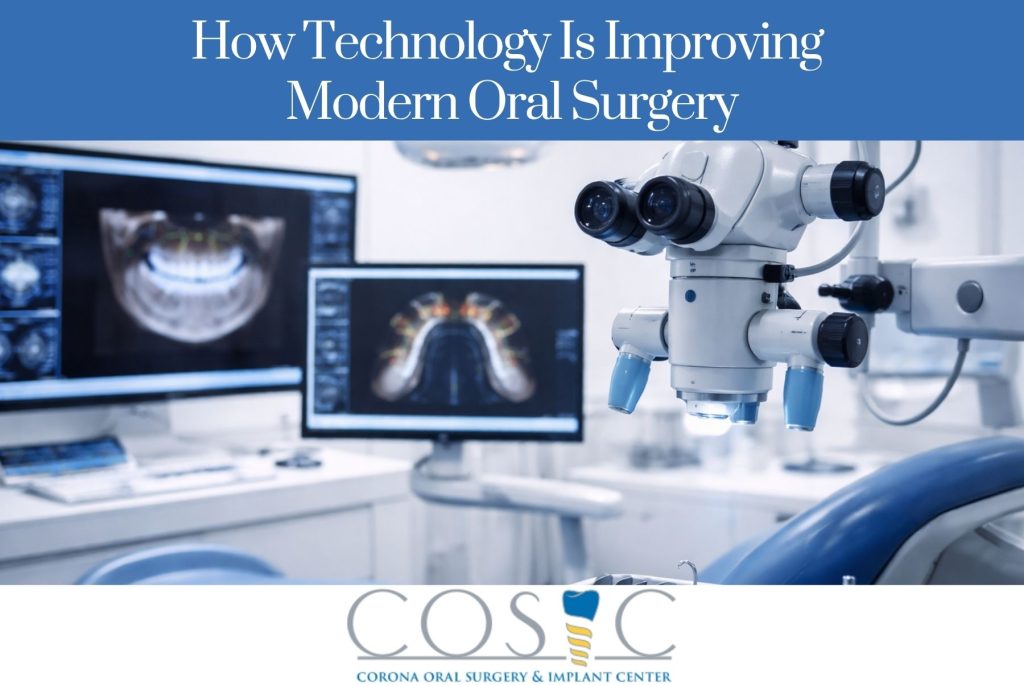
Modern oral surgery has undergone a remarkable transformation over the past decade, driven largely by rapid advancements in technology. At Corona Oral Surgery and Implant Center, patients benefit from cutting-edge tools and techniques that make procedures safer, faster, and more comfortable than ever before.
Whether you are considering dental implants, wisdom teeth removal, or corrective jaw surgery, understanding how technology enhances these treatments can help you feel more confident about your care.
The Evolution of Oral Surgery Technology
Oral surgery was once associated with longer recovery times, limited precision, and higher discomfort levels. Today, innovations such as 3D imaging, digital planning, and minimally invasive surgical techniques have completely changed the patient experience.
At Corona Oral Surgery and Implant Center, advanced technology is not just an add-on—it’s a core part of delivering exceptional results.
Key Technologies Transforming Oral Surgery
1. 3D Cone Beam CT Imaging (CBCT)
Traditional X-rays provide limited, two-dimensional views. In contrast, Cone Beam Computed Tomography (CBCT) creates highly detailed 3D images of your teeth, jawbone, nerves, and surrounding structures.
Benefits include:
- Greater diagnostic accuracy
- Safer surgical planning
- Reduced risk of complications
- Improved implant placement precision
This technology allows oral surgeons to visualize every detail before making a single incision.
2. Computer-Guided Implant Surgery
Dental implants require extreme precision. With computer-guided surgery, digital planning software is used to map out the exact position, angle, and depth of each implant.
Advantages:
- More predictable outcomes
- Minimally invasive procedures
- Faster healing times
- Enhanced long-term success rates
Patients at Corona Oral Surgery and Implant Center benefit from highly customized treatment plans tailored to their unique anatomy.
3. Digital Impressions
Gone are the days of messy, uncomfortable impression materials. Digital scanners capture accurate images of your mouth in seconds.
Why it matters:
- Increased comfort
- Improved accuracy
- Faster turnaround times for restorations
- Better fitting implants and prosthetics
4. Laser-Assisted Oral Surgery
Laser technology is revolutionizing soft tissue procedures. Lasers can be used for gum reshaping, biopsies, and infection control.
Key benefits:
- Reduced bleeding and swelling
- Lower risk of infection
- Minimal discomfort
- Faster healing
5. Platelet-Rich Fibrin (PRF) for Faster Healing
PRF is a regenerative technique that uses your body’s own blood to accelerate healing.
How it works: A small sample of your blood is processed to concentrate healing factors, which are then applied to the surgical site.
Benefits:
- Faster recovery
- Reduced inflammation
- Improved tissue regeneration
6. Advanced Sedation and Anesthesia Options
Modern sedation techniques ensure patient comfort and safety during procedures.
Options may include:
- IV sedation
- Oral sedation
- Local anesthesia with advanced monitoring systems
These advancements help reduce anxiety and make oral surgery more accessible for patients who may otherwise avoid treatment.
How Technology Improves Patient Outcomes
The integration of advanced technology in oral surgery leads to measurable improvements in:
- Precision: Better planning leads to more accurate procedures
- Safety: Reduced risk of nerve damage and complications
- Comfort: Less invasive techniques minimize discomfort
- Recovery: Faster healing times and fewer post-operative issues
- Results: More predictable, long-lasting outcomes
Why Choose Corona Oral Surgery and Implant Center?
At Corona Oral Surgery and Implant Center, the focus is on combining clinical expertise with the latest technology to deliver superior care.
Patients choose this practice because of:
- State-of-the-art surgical technology
- Personalized treatment plans
- Commitment to patient comfort
- Experienced and highly trained surgical team
Frequently Asked Questions (Q&A)
Q1: Is modern oral surgery less painful than in the past?
Yes. Thanks to advanced technology, minimally invasive techniques, and improved anesthesia, most procedures involve significantly less discomfort than traditional methods.
Q2: How does 3D imaging improve my treatment?
3D imaging allows your oral surgeon to see detailed structures of your jaw and teeth, leading to more precise planning and safer procedures.
Q3: Are dental implants safer with modern technology?
Absolutely. Computer-guided implant placement and CBCT imaging greatly reduce risks and improve the long-term success of implants.
Q4: What is the recovery time for modern oral surgery?
Recovery times are typically shorter due to minimally invasive techniques and regenerative technologies like PRF.
Q5: Is sedation safe?
Yes. Modern sedation techniques are highly controlled and monitored, making them very safe for most patients.
Q6: Will I need multiple visits for my procedure?
In many cases, advanced technology allows for fewer visits and more efficient treatment timelines.
Q7: Can technology reduce the risk of complications?
Yes. Enhanced imaging and planning tools help identify potential risks before surgery, significantly lowering complication rates.
Schedule Your Consultation Today
If you are considering oral surgery or dental implants, choosing a practice that utilizes advanced technology can make a significant difference in your experience and results.
Corona Oral Surgery and Implant Center is dedicated to providing modern, patient-focused care using the latest innovations in oral surgery.
Contact Information
Corona Oral Surgery and Implant Center
914 South Washburn Avenue Suite 3
Corona, CA 92882
Phone: (951) 736-8133
Website: cosicdds.com