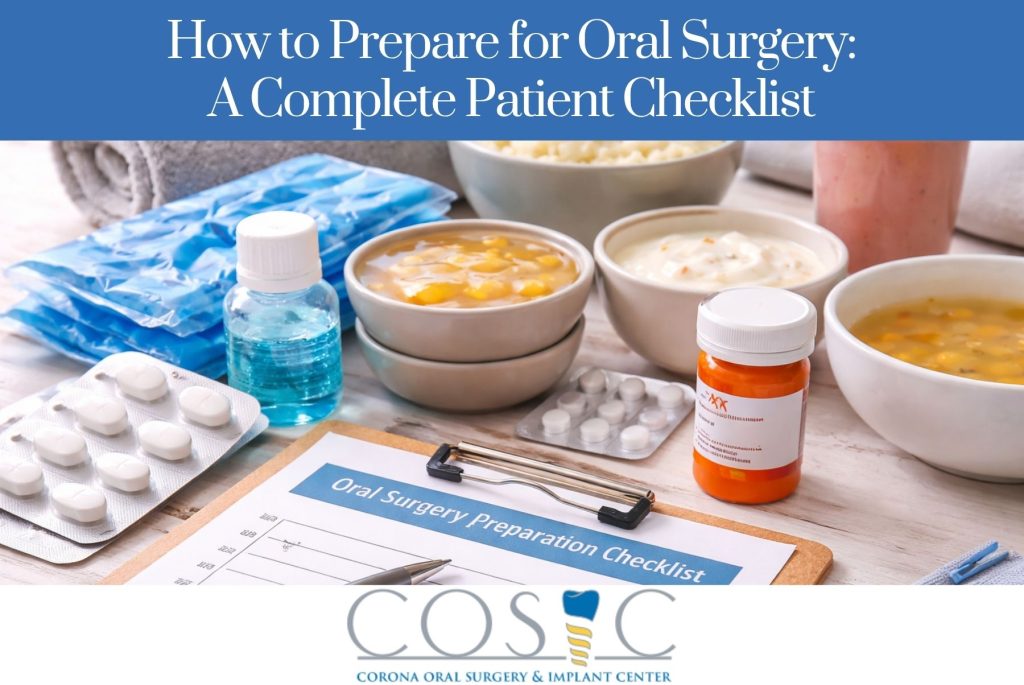
Preparing for oral surgery can feel overwhelming, especially if it’s your first time. Whether you’re scheduled for wisdom tooth removal, dental implants, or another procedure, proper preparation can make a significant difference in your comfort, safety, and recovery.
At Corona Oral Surgery and Implant Center, patient care begins long before you enter the treatment room. This comprehensive guide walks you through everything you need to know to feel confident, informed, and ready for your procedure.
Why Preparation Matters
Oral surgery is a routine and safe process when performed by experienced professionals, but your role as a patient is just as important. Proper preparation helps:
- Reduce anxiety and uncertainty
- Lower the risk of complications
- Ensure a smoother procedure
- Speed up recovery time
Think of preparation as setting the foundation for a successful outcome.
Your Oral Surgery Preparation Checklist
1. Understand Your Procedure
Before your surgery, make sure you clearly understand:
- The type of procedure being performed
- Why it’s necessary
- Expected recovery time
- Potential risks and benefits
Don’t hesitate to ask your oral surgeon questions. A well-informed patient is a more confident patient.
2. Follow Pre-Surgery Instructions Carefully
Your oral surgeon will provide specific instructions tailored to your procedure. These may include:
- Fasting: No food or drink for 6–8 hours if sedation is involved
- Medication adjustments: Temporary changes to prescriptions
- Avoiding alcohol or smoking before surgery
Ignoring these instructions can lead to delays or complications.
3. Arrange Transportation
If your procedure involves sedation or anesthesia, you must have a responsible adult:
- Drive you to and from the appointment
- Stay with you for several hours after surgery
You will not be able to safely drive yourself home.
4. Dress Comfortably
On the day of your surgery:
- Wear loose, comfortable clothing
- Avoid makeup, jewelry, and contact lenses
- Choose short sleeves (for IV access, if needed)
Comfort and accessibility help the medical team work efficiently.
5. Prepare Your Recovery Space
Before leaving for your appointment, set up a comfortable area at home:
- Extra pillows to keep your head elevated
- Ice packs for swelling
- Easy access to medications
- Entertainment (books, TV, etc.)
Planning ahead means less stress when you return home.
6. Stock Up on Soft Foods
After oral surgery, your diet will be limited. Prepare by having soft foods ready:
- Yogurt
- Applesauce
- Mashed potatoes
- Smoothies (no straws initially)
- Soup (lukewarm, not hot)
Avoid crunchy, spicy, or hard foods during recovery.
7. Fill Prescriptions in Advance
Your oral surgeon may prescribe:
- Pain medication
- Antibiotics
- Antibacterial mouth rinse
Fill these prescriptions before your procedure so they’re ready when you need them.
8. Stop Smoking
Smoking significantly increases the risk of complications such as:
- Dry socket
- Delayed healing
- Infection
Ideally, stop smoking at least 48–72 hours before and after surgery.
9. Plan Time Off
Give yourself adequate time to recover:
- Take 1–3 days off for minor procedures
- Longer for more complex surgeries like implants
Rest is essential for healing.
10. Follow Post-Op Instructions Closely
Preparation doesn’t end when surgery begins. Recovery depends on:
- Proper oral hygiene
- Medication adherence
- Avoiding strenuous activity
Careful follow-through ensures the best results.
What to Expect on the Day of Surgery
When you arrive at Corona Oral Surgery and Implant Center, you can expect:
- A review of your medical history
- Final questions answered by your surgeon
- Administration of anesthesia or sedation
- A comfortable, professional environment focused on your safety
The team prioritizes patient comfort and precision at every step.
Common Mistakes to Avoid
Even well-prepared patients sometimes overlook key details. Avoid these common pitfalls:
- Eating before sedation when instructed not to
- Forgetting to arrange transportation
- Skipping medications or instructions
- Using straws too soon after surgery
- Returning to normal activity too quickly
Small missteps can impact your recovery more than you might expect.
Q&A: Oral Surgery Preparation
Q: How long should I fast before oral surgery?
A: Typically 6–8 hours if you’re receiving sedation. Always follow your surgeon’s exact instructions.
Q: Can I brush my teeth before surgery?
A: Yes, unless instructed otherwise. Avoid swallowing water if you are fasting.
Q: What if I feel sick before my appointment?
A: Contact your oral surgeon immediately. Illness may require rescheduling.
Q: Is it normal to feel nervous?
A: Absolutely. Anxiety is common, and your surgical team is trained to help you feel comfortable and informed.
Q: How long does recovery take?
A: It depends on the procedure. Minor surgeries may take a few days, while more complex ones can take a week or longer.
Q: Can I go back to work the next day?
A: Some patients can, but most benefit from at least 1–2 days of rest.
Q: What should I avoid after surgery?
A: Avoid smoking, alcohol, straws, and strenuous activity during early recovery.
Q: When can I eat normally again?
A: Gradually reintroduce foods as healing progresses—typically within several days to a week.
Q: Will I need stitches?
A: Some procedures require sutures, which may dissolve on their own or be removed later.
Q: When should I call the office after surgery?
A: Contact your surgeon if you experience excessive bleeding, severe pain, fever, or signs of infection.
Final Thoughts
Preparing for oral surgery doesn’t have to be stressful. With the right guidance and a clear checklist, you can approach your procedure with confidence.
At Corona Oral Surgery and Implant Center, patient education and comfort are top priorities. By following these preparation steps, you’re setting yourself up for a smoother procedure and faster recovery.
Contact Information
Corona Oral Surgery and Implant Center
914 South Washburn Avenue, Suite 3
Corona, CA 92882
Phone: (951) 736-8133
Website: cosicdds.com