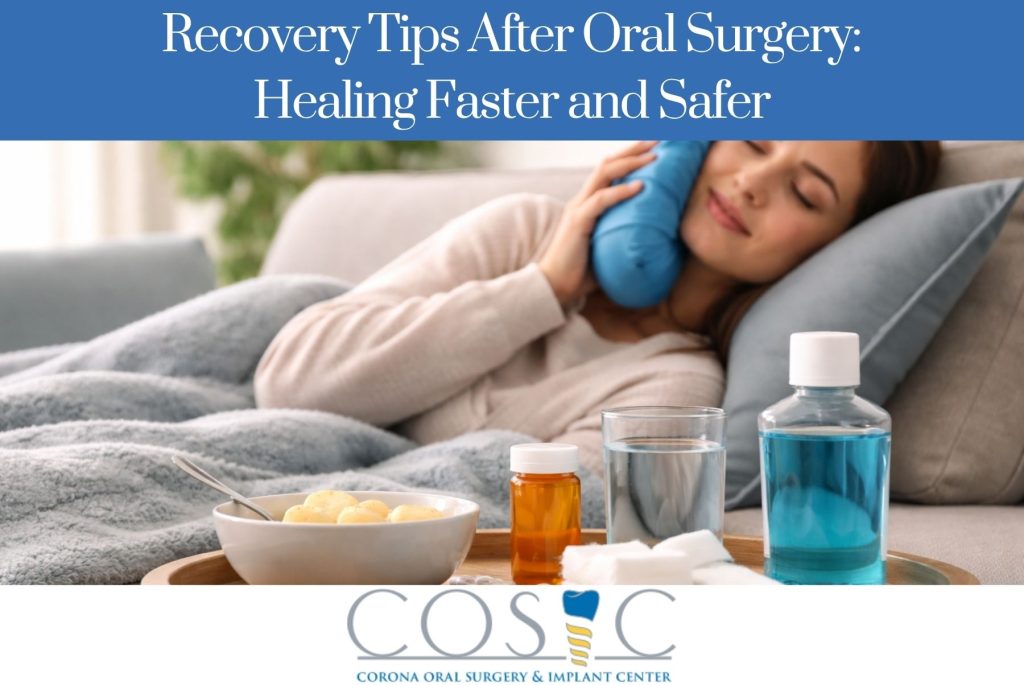
Oral surgery is a common and often necessary step toward restoring your dental health—whether you’ve had wisdom teeth removed, dental implants placed, or another surgical procedure. While the procedure itself is important, your recovery plays an equally critical role in achieving the best outcome. At Corona Oral Surgery and Implant Center, patients receive expert care and guidance to ensure a smooth, safe, and efficient healing process.
Below is a comprehensive guide to help you recover faster, reduce complications, and get back to your normal routine with confidence.
Why Proper Recovery Matters
Healing after oral surgery isn’t just about comfort—it directly impacts the success of your procedure. Poor aftercare can lead to complications such as infection, dry socket, delayed healing, or implant failure. Following the right recovery steps helps:
- Minimize pain and swelling
- Reduce risk of infection
- Promote faster tissue regeneration
- Ensure long-term success of your treatment
Essential Recovery Tips After Oral Surgery
1. Follow Post-Operative Instructions Carefully
Your oral surgeon provides personalized aftercare instructions tailored to your procedure. These may include medication schedules, dietary restrictions, and hygiene practices. Do not skip or modify these instructions without consulting your provider.
2. Manage Bleeding Properly
Some bleeding is normal in the first 24 hours.
- Bite gently on gauze as directed
- Avoid spitting or rinsing vigorously
- Keep your head elevated
If bleeding persists beyond expected levels, contact your oral surgeon immediately.
3. Reduce Swelling and Discomfort
Swelling typically peaks within 48–72 hours.
- Apply an ice pack (20 minutes on, 20 minutes off) during the first 24 hours
- Switch to warm compresses after 48 hours if needed
- Take prescribed or recommended pain medication
4. Stick to a Soft Food Diet
Your mouth needs time to heal without irritation.
Recommended foods:
- Yogurt
- Mashed potatoes
- Smoothies (no straws)
- Scrambled eggs
- Applesauce
Avoid:
- Hard, crunchy, or spicy foods
- Hot foods immediately after surgery
- Using straws (can cause dry socket)
5. Stay Hydrated—But Carefully
Drink plenty of fluids, but avoid:
- Straws (suction can dislodge clots)
- Alcohol
- Carbonated beverages (initially)
Water is your best option during recovery.
6. Prioritize Oral Hygiene (Gently)
Keeping your mouth clean prevents infection.
- Avoid brushing near the surgical site for the first day
- Use a prescribed rinse or saltwater rinse after 24 hours
- Resume gentle brushing as directed
7. Avoid Smoking and Tobacco
Smoking is one of the biggest risks to proper healing.
- Increases risk of dry socket
- Slows healing significantly
- Raises infection risk
Avoid smoking for at least 72 hours—preferably longer.
8. Get Plenty of Rest
Your body heals best when you rest.
- Limit physical activity for several days
- Avoid strenuous exercise
- Sleep with your head elevated
9. Watch for Warning Signs
While most recoveries are smooth, contact your oral surgeon if you experience:
- Severe or worsening pain after a few days
- Persistent bleeding
- Signs of infection (fever, pus, bad taste)
- Difficulty swallowing or breathing
Recovery Timeline: What to Expect
First 24 Hours:
Bleeding, swelling begins, rest is critical
Days 2–3:
Peak swelling and mild discomfort
Days 4–7:
Improvement begins, soft tissue healing
1–2 Weeks:
Most symptoms subside, normal routines resume
Long-Term (Implants):
Full healing and integration may take several months
Why Choose Corona Oral Surgery and Implant Center?
At Corona Oral Surgery and Implant Center, patients benefit from:
- Advanced surgical techniques
- Personalized recovery plans
- Compassionate, experienced care
- A strong focus on safety and long-term success
Their team is committed to guiding you through every step—from consultation to full recovery.
Frequently Asked Questions (Q&A)
Q1: How long does it take to recover from oral surgery?
Recovery varies depending on the procedure, but most patients feel significantly better within 7–10 days. Full healing may take several weeks to months for more complex procedures like dental implants.
Q2: What is dry socket and how can I avoid it?
Dry socket occurs when the blood clot at the surgical site becomes dislodged. Prevent it by:
- Avoiding straws
- Not smoking
- Following aftercare instructions closely
Q3: When can I return to work or school?
Most patients can return within 2–3 days, depending on the complexity of the surgery and how they feel.
Q4: Is swelling normal after oral surgery?
Yes, swelling is completely normal and typically peaks within 48–72 hours before gradually subsiding.
Q5: Can I brush my teeth after surgery?
Yes, but avoid the surgical area for the first 24 hours. Resume gentle brushing as advised by your surgeon.
Q6: What foods should I avoid?
Avoid hard, crunchy, spicy, and hot foods. Stick to soft, cool foods during the early recovery phase.
Q7: When should I call my oral surgeon?
Contact your provider if you experience:
- Excessive bleeding
- Severe pain
- Signs of infection
- Unusual swelling or complications
Contact Information
Corona Oral Surgery and Implant Center
914 South Washburn Avenue Suite 3
Corona, CA 92882
Phone: (951) 736-8133
Website: cosicdds.com